By Heba Khan, Marketing Coordinator, Kinetic
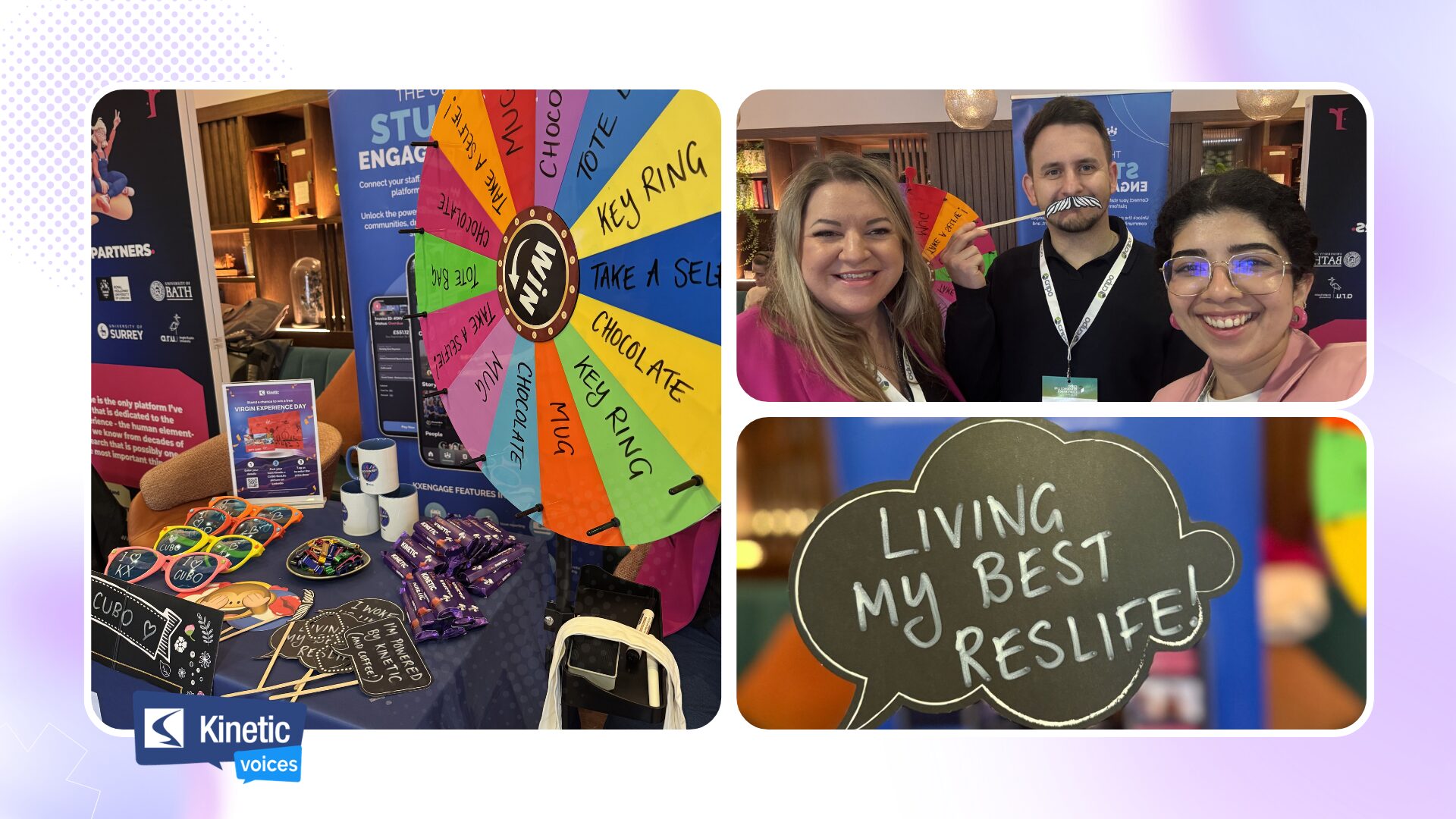
I’ll be honest: walking back into Loughborough University this week felt strange in the best way. The last time I was here, I was a student. This time, I was attending the CUBO Residence Life Conference 2026 as part of the Kinetic team.
Two days, several sessions, a lot of coffee, and some genuinely memorable conversations later, one thing is sitting with me more than anything else. It kept coming up in different rooms, in different ways, from people working at very different institutions. The gap between what students say they want and what they actually need.
“We do what they ask. They still don’t come.”
This was the frustration I heard most often, and nobody said it more plainly than a residence life professional describing their events programme: students fill in the survey and say they want work-experience events and academic-skills workshops. You build the programme. Nobody shows up.
The data backs this up. Research presented at the conference showed that the top activity students said they’d want from their accommodation was access to work experience opportunities, followed closely by academic skills masterclasses and sports. A TURF analysis revealed that just three well-chosen event types could reach nearly two-thirds of students. The theory is solid.
But as the room made clear, theory and turnout are two very different things.
“I can put on everything they ask for and more. Getting them through the door, that’s the hurdle.”
The honest answer might be that we’re asking the wrong question. Students don’t always know what they need until they’re in the room. What they consistently show up for, food events, the pizza on the piazza, the Greek feast, the therapy dogs during exams, is connection in its most low-friction form. The event is rarely the point. The excuse to leave their room is.
The move-in moment matters more than we think
One of the most striking findings shared was this: students who rate their move-in experience as very good, not just good but excellent, are significantly more likely to feel a strong sense of community and belonging throughout their time in halls. That single day carries disproportionate weight.
A student voice recording played during one session stopped the room:
“The facilities were amazing, and the staff were great. But the fact that I didn’t have anyone to share that with made university feel really isolating at the beginning.”
She would have chosen to live somewhere else, despite the excellent provision, simply because she didn’t make friends in her accommodation. Belonging isn’t a nice-to-have layered on top of good operations. It is the product.
The conflict conversation nobody was ready to have
If one theme genuinely caught the room off guard, it was the scale and nature of student conflict playing out in halls right now, and the expectation that staff should resolve all of it.
Practitioner after practitioner described the same pattern: students bypassing peer support structures entirely, escalating directly to senior staff, and in some cases, parents travelling across the country to demand that a flatmate be removed. Over a toaster. Over a shower that hadn’t been reported. Over someone not cleaning the kitchen.
“It’s cancel culture, but make it residential.”
The underlying issue isn’t just entitlement, though that’s part of it. Students are paying more and expecting more. They are also, as one session explored in depth, arriving in halls without the basic conflict navigation skills that come from having difficult conversations face to face. A generation largely socialised through devices doesn’t always have the tools to work through the ordinary friction of shared living.
One student’s voice note made it very simple: he had gone to the wellbeing team not because he was in crisis, but because he genuinely didn’t know how to talk to his flatmates.
Kitchen cleanliness came up more than once as a flashpoint. One attendee, only half joking, mentioned redesigning their entire residential curriculum for next year, starting with how to clean a toilet. The room laughed. Then nodded.
The students showing up are the ones with the most to lose
Something that stayed with me came from a session on student engagement: the students who engage most readily aren’t always the ones teams might expect.
International students consistently show higher levels of social engagement than their domestic peers. As someone who studied abroad myself, I found myself contributing to this conversation directly:
“For me, my family is a continent away. My entire life that I’d lived before, I’d have to take a flight to see those people. If I don’t engage in the life I’m creating here, I’m just going to be on my own. And nobody wants to be lonely.”
Students with the most to lose from isolation are often the ones most willing to take the social risk. That’s worth understanding, not to treat those students differently, but to design with their reality in mind.
Gen Alpha is only two years away
The conference closed with a provocation that will shape sector thinking for some time: Generation Alpha arrives at university in 2028. They are the first truly AI-native cohort. They have never known a world without a touchscreen.
And yet the research was clear. AI native does not mean AI obsessed. What this cohort says it cannot live without is its smartphone. What it actually spends most time doing includes casual outdoor play, hanging out with friends in person, and watching television on a big screen.
They want comfort. They want connection. They want a space that feels like theirs.
One fifteen-year-old, speaking in a short film shown during the session, said it better than any data point could:
“If I do move away for uni, I want to go somewhere that feels like mine. Somewhere I can chill. But also not be completely alone.”
That isn’t a new student need. It is the oldest one. The challenge for residence life teams is meeting it in a world that has made isolation far easier to choose.
What we’re taking away
The CUBO Residence Life Conference 2026 was a reminder that the work of residence life is rarely about the event itself. It is about the conditions that make belonging possible, and the gaps in skills, spaces, timing and trust that make it harder than it should be.
The sector is asking the right questions. The answers are more complex than a programme calendar or a survey result can capture.
Over the coming weeks, we will be sharing deeper insight from each session we attended, looking at what the data, the discussions and the practitioner voices mean for the institutions and teams working to get this right.
Watch this space.
Kinetic Software was the Headline Sponsor of the CUBO Residence Life Conference 2026.
CUBO College and University Business Officers
Read more Kinetic Voices here.