Reflections from “Digital Masculinity and the Manosphere” | CUBO Residence Life Conference 2026
By Heba Khan, Marketing Coordinator, Kinetic
There was a moment in this session that stopped the room. Not a statistic. Not a policy point. Just a sentence.
“The journey rarely begins with hate. It often begins with loneliness, insecurity, ambition, rejection.”
Clement Akran, a practitioner and educator who has spent decades working with some of the hardest-to-reach young people across the UK, delivered one of the most candid and thought-provoking sessions of the CUBO Residence Life Conference 2026. His work spans secondary schools, community projects, and now university settings, and this was his first time bringing this particular conversation to a room of higher education practitioners.
What he brought was not a lecture. It was an invitation to think differently about what is happening to young men online, why it is landing in our halls, and what any of us can realistically do about it.
Two spheres, one generation
Clem opened with a framing that set the tone for everything that followed. For most of human history, he said, people have operated in one sphere: the physical world. We developed language, culture, body language, facial expression, the ability to read a room, to pick up on a cue, to know when a joke has landed badly and pull back.
In the last twenty years, a second sphere has opened up. Cyberspace. And for the first time in history, we are operating in both simultaneously, without the evolutionary toolkit to navigate either one well in relation to the other.
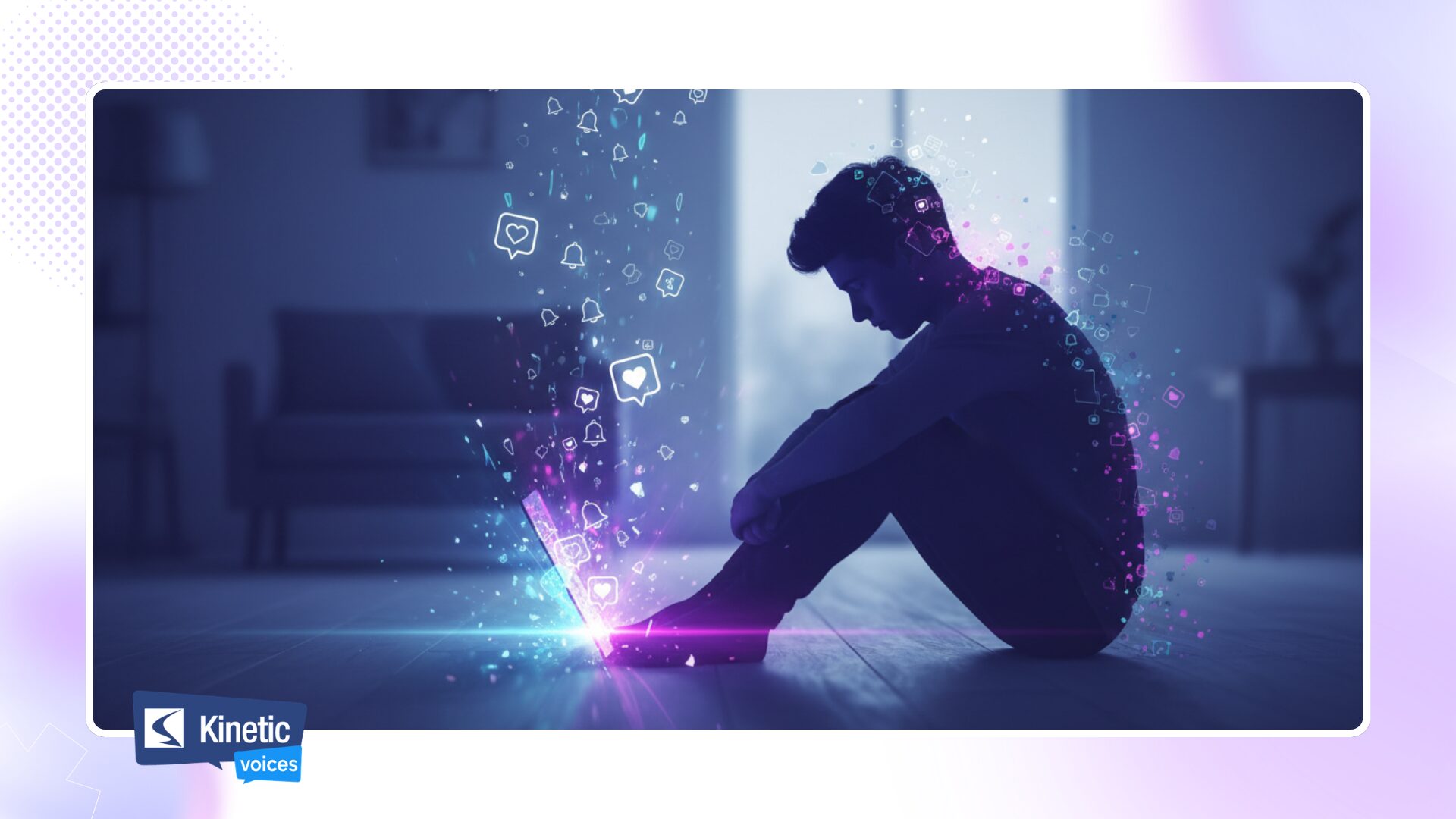
Social media platforms were not built with malicious intent. They were built to connect people. But the moment monetisation entered the picture, the game changed. Keeping people on the platform longer meant more ad revenue. More ad revenue meant more data. More data meant more targeted content. And more targeted content meant that the algorithm became extraordinarily good at feeding people more of whatever was already holding their attention.
For a lonely, insecure, or economically anxious young man, that mechanism is not neutral. It is a pipeline.
What the manosphere actually is
Clem was careful to define his terms, and equally careful not to overstate. The manosphere, he explained, is not a single organisation or movement. It is a loose network of influencers, forums, content creators, and online communities that orbit around themes of masculinity, status, relationships, and male identity. Some have explicit political or religious dimensions. Most do not start there.
The common themes across the space are: a facade of self-improvement, wealth and status aspirations, dating advice, anti-feminist narratives, emotional suppression, dominance and hierarchy, and a deep distrust of institutions. The language is specific: red pill, blue pill, alpha male, beta male, the matrix, getting out of the system. This language matters because it creates identity and belonging. It gives frustrated or confused young men a shared vocabulary for their frustration, and a community that reflects it to them.
What makes these influencers persuasive is not primarily their ideology. It is that they are entertaining, charismatic, and feel unfiltered. They speak directly to camera. They appear to have no PR team, no corporate polish, no agenda beyond telling the truth as they see it. To a sixteen-year-old who is bored, struggling academically, and comparing himself to people his age who appear to have built media empires from their bedrooms, that is a powerful combination.
“They offer certainty. Structure. Community. Language. Identity. And for most young people who are confused and unsure, that is the hook.”
The digital pipeline: how it reaches your students
The entry point is rarely the ideology itself. It tends to be something entirely innocent. A fitness video. A productivity tip. A motivational clip about working hard and building something. The algorithm registers that the user engaged with this content, and begins serving more. Gradually, without any single moment of conscious choice, the content shifts. Fitness becomes hustle culture. Hustle culture becomes dating advice. Dating advice becomes anti-feminist content. Anti-feminist content becomes something harder.
I contributed something to this discussion that I think gets at why this is so difficult to interrupt. Teenagers and young adults often lack impulse control. They are still developing. And if you watch one video for longer than a few seconds, your algorithm is going to keep showing you the same topic. So it becomes an echo chamber of the same thought, from different voices, and after a while you cannot help but believe it. And then you see the comments. If even one of them resonates, you feel found. These are my people. They think exactly how I feel. And then you want to keep going back.
Clem made an observation that I found quietly devastating. In previous generations, if a young man was struggling, he might speak to an older cousin, a community figure, a coach, someone in his neighbourhood with a bit of life experience. Now the go-to place is social media and AI. The mentors have been replaced by influencers. And the influencers have a financial incentive to keep him watching.
What practitioners are seeing on the ground
The room was full of people who recognised what Clem was describing. The Q&A that followed his framing was one of the most candid exchanges of the conference.
One practitioner described a year in which flat-related incidents had risen sharply, with a visceral, aggressive quality that felt new. Students demanding meetings about toaster purchases and hammering on doors when people were unavailable. The intensity felt disproportionate, and a lot of it seemed to stem from young men who felt, in some way, left out.
Another described a female student who brought a TikTok video to a meeting with her team, using it as evidence that oestrogen in UK tap water was making men gay. She was entirely serious. The likes and comments were her proof. If everyone is saying it, it must be true.
Clem’s response to this was worth noting. It goes both ways, he said. The misinformation problem is not gendered. The algorithm serves everyone a distorted reality. The question is what that distortion looks like for different people, and what it makes them more likely to do or believe.
One attendee who had previously worked in a welfare role described the specific difficulty of sitting one-to-one with a young man who was not at the end of the pipeline but was clearly somewhere in it. He was neurodiverse, had been publicly shamed in a flat group chat, and had developed a deep suspicion of women at the gym based on something he had absorbed online. She found the situation genuinely difficult to navigate. Not because she did not care, but because she did not know how to reach the root of it without pushing him further away.
“It made me feel quite helpless. I didn’t actually know how to help him.”
That honesty was met with recognition around the room. Nobody has solved this. Everyone is trying their best within very limited resources.
What seems to help
The session was deliberately not prescriptive about solutions, because Clem’s view is that the people in the room are closer to the answers than any external expert. But a few things emerged from the discussion that felt worth capturing.
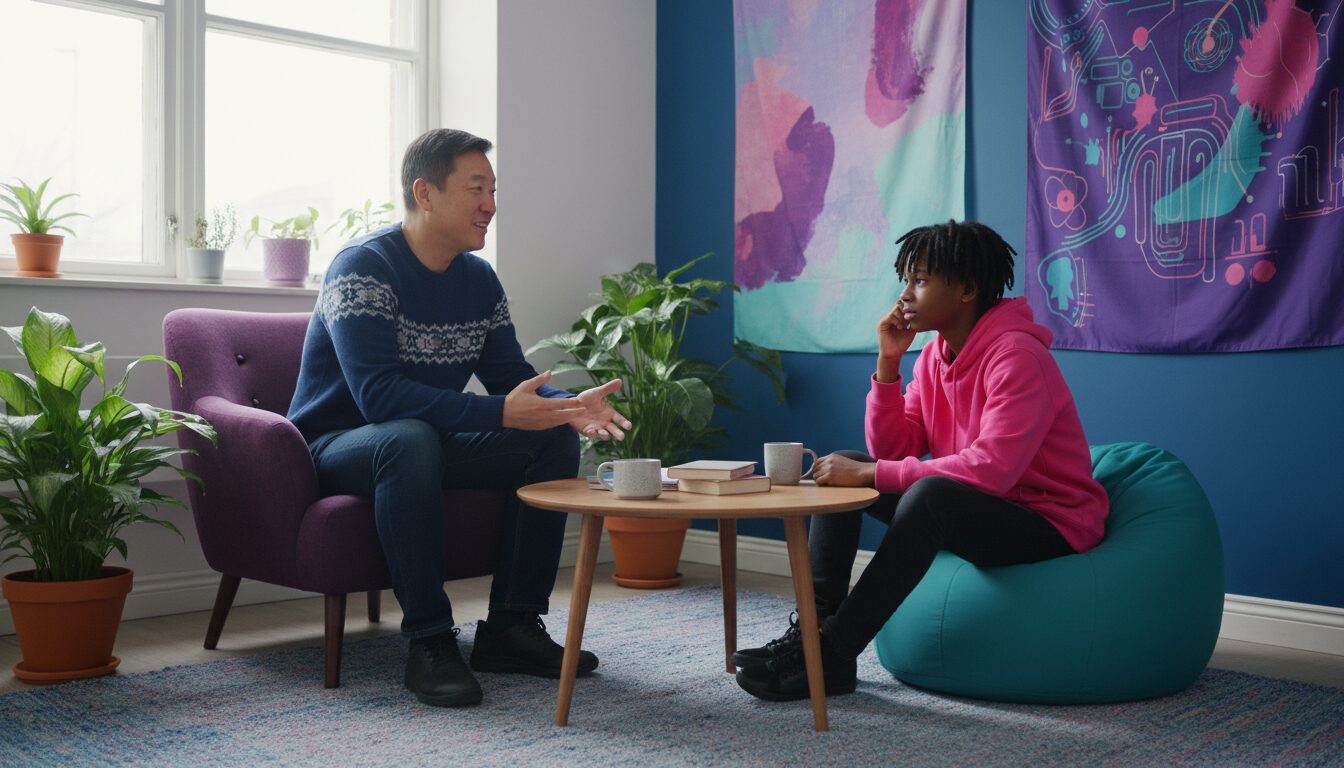
Getting young men to name their emotions. One practitioner said this was the single most effective thing she had found. Many young men who end up in these spaces do not have the vocabulary to describe what they are feeling. Reflective practice, asking what they felt rather than what happened, creates a different kind of conversation. It is slow work, but it is foundational.
Showing up repeatedly. One attendee described ignoring the formal case closure process for certain students and simply continuing to check in. Not because the case was unresolved, but because the reliability of a real person who gives a genuine care is itself the intervention. The message it sends is: that online community is not reliable. I am.
Practising conversation. One practitioner worked with a young man who had generated complaints from multiple students because he did not know how to have a conversation with people. He was not malicious. He was socially underdeveloped. They spent time practising. What do you like? What did you watch last night? What might you have in common with the person you are trying to talk to? It sounds basic. It worked.
Teaching media literacy through experience, not instruction. One attendee described an exercise she ran with female students where they printed out an Instagram post they had shared, one that made their life look wonderful, and told the story of what the day was actually like. The picture of someone with a limoncello spritz in Italy. The reality: missed flight, hotel closed, a difficult day. The point is not that social media is fake. It is that nobody is showing you their whole life. And experiencing that collectively, rather than being told it, changes something.
Building a bank of ideas as a team. Clem suggested an approach he had read about: rather than trying to develop a single programme, teams should compile a pool of ten possible interventions in regular meetings, prioritise one, run it for a quarter, and evaluate it. It borrows from agile methodology. It keeps the team creative, prevents burnout around a single approach, and builds institutional knowledge over time.
The role model question
One thread that ran through the session deserves its own mention. Clem pushed back gently on the idea that a lack of male role models is driving young men toward the manosphere. The role models exist, he said. The question is whether we recognise them. The football coach who gives up his evenings. The scout leader. The community volunteer. The man who reads to primary school kids on Tuesday mornings.
The manosphere fills a vacuum. But Clem’s view is that the vacuum is not entirely real. It is partly a failure of recognition, of amplifying the right voices, of helping young men see that success is not a supercar or a social media following. It is the person who shows up.
That is something residence life teams, with their daily proximity to students at a formative moment, are uniquely placed to model.
Kinetic was Headline Sponsor of the CUBO Residence Life Conference 2026. This is part of an ongoing series of articles reflecting on sessions from the event.
Read more Kinetic Voices here.