
Reflections from “Building Connections: The Power of Residence Life in Student Experience” | CUBO Residence Life Conference 2026 | Part One of Two
By Heba Khan, Marketing Coordinator, Kinetic
At the CUBO Residence Life Conference 2026, Sarah Ead, Head of Insight at GSL, presented preliminary findings from their annual student experience report ahead of its full launch at the CUBO Summer Conference in July. The research draws on large-scale student surveys across UK higher education and has become one of the sector’s most referenced sources of insight on what actually shapes the student accommodation experience.
This is the first of two articles drawing on that session. This one focuses on belonging: where it comes from, when it is lost, and why it is so difficult to recover.
The move-in moment is doing more than we realise
The research opened with a finding that sounds simple but carries significant weight. Students who rated their move-in experience as very good, not just good but excellent, were significantly more likely to report a strong sense of community and belonging throughout their time in halls.
That distinction between good and very good matters. It suggests that a move-in experience that runs smoothly, where the keys work and the room is clean and the staff are helpful, is not enough on its own. What tips the scale is something harder to manufacture: the sense that this is a place where you are going to find your people.
A student voice recording played during the session illustrated this in a way that data alone cannot. She described excellent facilities, attentive staff, and an accommodation that was doing everything right. And yet:
“The fact that I didn’t have anyone to share that with made university feel really isolating at the beginning.”
By the time her accommodation tried to bring residents together later in the year, it was too late. She had already built her social life elsewhere. She said she would have chosen to live somewhere else entirely, despite everything being objectively good.
That is the belonging problem in its starkest form. Everything on paper was right. The social foundation was not laid in time. And once that window closes, the research suggests it is very hard to reopen it.
Belonging is relational, not infrastructural
The session asked a straightforward question: which features of accommodation most drive a student’s sense of belonging? The answers were instructive, and they did not point to the building.
Relationships with other students came first, by a clear margin. Opportunities for social interaction came second. Noise levels and the availability of communal spaces followed.
The quality of facilities, the design of bedrooms, the speed of maintenance responses: none of these featured prominently. This is not to say the physical environment does not matter. It creates the conditions in which social connection either happens or does not. But the relationships are the thing. Everything else is scaffolding.
What also emerged clearly in the research was what undermined belonging once it had been established. Conflict with other residents came up repeatedly in the free-text responses, with many students describing flatmate disputes as one of the most damaging aspects of their time in accommodation.
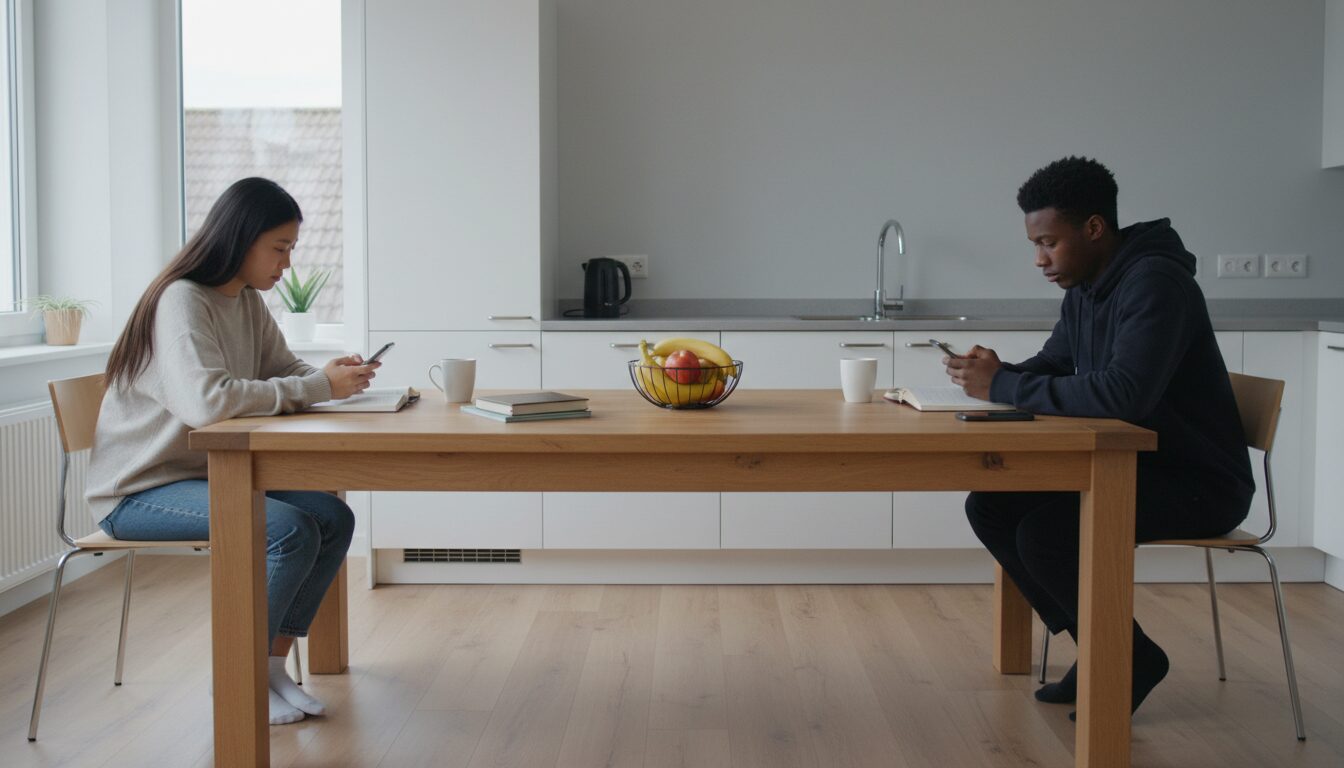
Interestingly, it was not always about having close, strong friendships. What students needed more than deep connection was the absence of conflict. Relationships that were comfortable, respectful and low-tension were sufficient to sustain a sense of belonging. It was when those relationships broke down, or never formed at all, that the sense of isolation set in.
Many students in the survey also expressed an expectation that their accommodation provider would help them navigate conflict when it arose. Whether or not that expectation is reasonable is a separate conversation. But it points to a gap between what students feel equipped to handle and what they are actually being asked to manage on their own.
The students most at risk of missing out
When the belonging data was broken down by demographic group, a clear pattern emerged. Students with a disability, neurodivergent students, and LGBTQI+ students were all significantly more likely to report barriers to social engagement and a weaker sense of belonging than their peers.
These findings connect to GSL’s Closing the Gap report, which examines inequality in student experience in more depth. The picture here reinforces that message: a programme designed for the average student is quietly failing some of the students who most need connection.
The barriers for these groups are not always visible, and they are not always the ones that standard student voice surveys will surface. A student who is neurodivergent may find the noise and unpredictability of a busy welcome event genuinely overwhelming, not just a bit awkward. A disabled student may face physical or logistical barriers that simply are not visible to the team putting the programme together. An LGBTQI+ student may be navigating questions about identity and safety before they have even thought about whether they want to attend the quiz night.
Designing for these students is not about running separate programmes for separate groups. It is about asking, when planning anything, who might not be able to access this, and what would it take to change that.
When belonging is lost, it shapes everything
One of the most sobering findings in the session was the relationship between social engagement and retention. Students who said they were at university purely to study, with no interest in extracurricular involvement, were the most likely group to consider dropping out.
That correlation is worth sitting with. The absence of social connection is not a neutral outcome. It is an early indicator that a student’s overall experience is at risk. A student who feels isolated in their accommodation is more likely to disengage from their course, more likely to struggle with their wellbeing, and more likely to leave before completing their degree.
This is the belonging problem at its most consequential. It is not just about whether students enjoy their time in halls. It is about whether they stay.
What this means in practice
The full GSL report will be released at CUBO Summer in July and is worth reading in its entirety. But even from these preliminary findings, a few things stand out.
The move-in period is not just a logistical challenge. It is the single most important opportunity to lay the social foundations of a student’s entire experience in halls. Investment in making that moment excellent, not just smooth, pays dividends across the whole tenancy.
Communal spaces matter, but only if they invite the right kind of interaction. A space that is available is not the same as a space that is welcoming. Thinking about how communal areas are designed, programmed and staffed in those first critical weeks is worth the attention.
Conflict prevention is community investment. The more teams can do to reduce friction in shared living, through clear expectations, early intervention, and the tools students need to navigate disagreement, the stronger the social fabric of the accommodation becomes.
And the students who are hardest to reach are often the ones who most need connection. Building programmes that are genuinely accessible to students with disabilities, neurodivergent students, and LGBTQI+ students is not a diversity and inclusion exercise. It is a belonging exercise. And belonging, the data is clear, is the thing that holds everything else together.
The second article from this session looks at what the data tells us about engagement, event design, and specialist accommodation. Read it here.
The full GSL annual student experience report were presented at the CUBO Summer Conference in July 2026.
Kinetic was the Headline Sponsor of the CUBO Residence Life Conference 2026. This is part of an ongoing series of articles reflecting on sessions from the event.
Read more Kinetic Voices here.