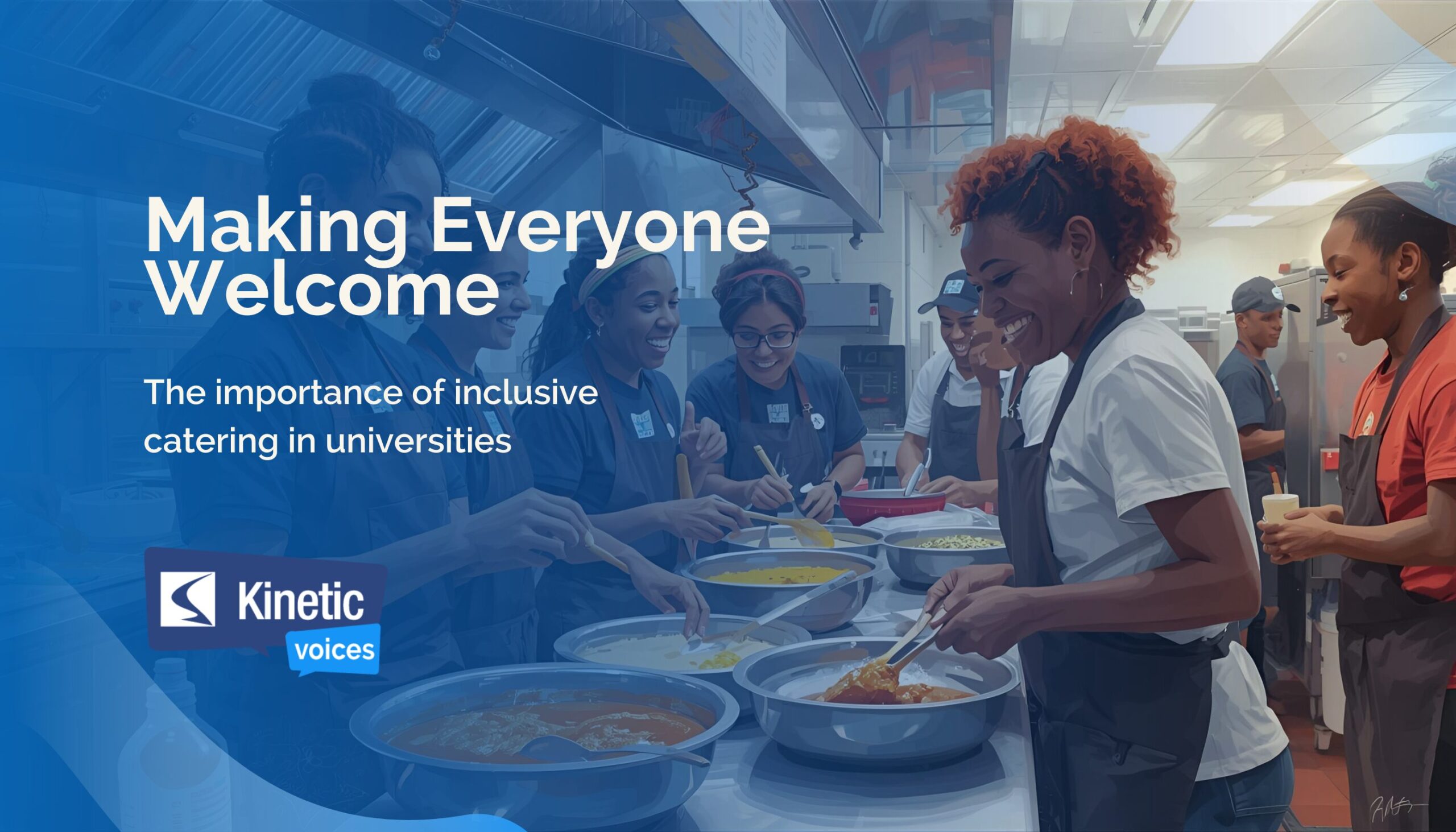
Food can be a powerful part of making sure that people feel welcome, which means that accommodating diverse dietary needs on university campuses is not just a box to be ticked, but a way to demonstrate respect and boost satisfaction and loyalty.
But the spectrum of dietary needs to be considered is broad, encompassing allergies, intolerances, religious restrictions, and lifestyle choices such as veganism and vegetarianism. So how can universities get it right?
The Power of Mirroring Meals
At the University of Strathclyde, the catering team makes significant efforts to create alternative dishes that mirror the appearance and presentation of standard options, ensuring that individuals with dietary requirements don’t feel excluded or palmed off, explains Head of Catering Graham Paterson.
Graham Paterson
Head of Catering
University of Strathclyde
“We create dishes that look and feel as close as possible,” he says, recalling a recent event for an external client. “The starter was honey-roasted beetroot with buffalo mozzarella in a radish and soft herb salad. So the vegan, vegetarian and other alternative was a vegan mozzarella, but it still had the same honey roasted beetroot, the radish, the soft herb salad. So the two dishes looked practically identical, both cut the same way and served the same way. So if you were sat at the table, you wouldn’t feel any different to anybody else.”
There are times when such close mirroring isn’t possible, he continues,
Graham Paterson
Head of Catering
University of Strathclyde
“But when we do get it right, it’s really well received, and certainly from our perspective, it’s worthwhile.”
Managing allergens is also a key consideration, he continues, particularly since the introduction of Natasha’s Law in 2021, which requires that all food businesses in the UK provide full ingredient lists and allergen information on foods that are pre-packaged for direct sale.
Paterson explains that the university catering team has implemented a system called Saffron, which includes an allergen portal where all recipes and their associated allergens are recorded and accessible to consumers via QR codes at retail and buffet locations. But, he explains, the teams work from a position of trying to keep allergens out of dishes wherever possible.
Graham Paterson
Head of Catering
University of Strathclyde
“Our primary goal is to make that first dish as clean a deck as possible, minimising the 14 major allergens, and taking it from there. If we need a secondary dish to support that, then we will do, and obviously, you can’t exclude all allergens all of the time, but we do put a lot of that into our menu planning to work out how we can be as effective around that as we can.”
Considering Cultural Concerns
It’s also crucial to recognise the importance of cultural inclusivity, says Richard Narramore, Executive Chef at the University of Exeter. And so the catering team has expanded its options to include halal-certified meals and recently introduced pre-packaged kosher ready meals in two outlets.
Richard Narramore
Executive Chef
University of Exeter“And we’ve been in consultation with the Students’ Guild to try and meet different dietary and cultural requirements because our vegan push over the last few years with plant-based options has been quite huge.”
Likewise, at Royal Holloway, University of London, there is a proactive approach to aligning catering with significant cultural events throughout the year, explains Marketing Executive Carol Robinson.
Carol Robinson
Marketing Executive
Royal Holloway, University of London
“Obviously, we acknowledge Christmas, but that’s a Christian festival, so we try and look at other festivals, like Thanksgiving, and Diwali, for example. Throughout the year, we always adapt our foods to reflect those key dates in the calendar, and we try to be sympathetic to our student demographic.”
Inclusion on Every Plate
It’s clear that proactively addressing diverse dietary needs – whether due to allergies, religious beliefs, or lifestyle choices – goes far beyond mere compliance. It necessitates a thoughtful and creative approach to menu development, but with the right effort, it can foster a sense of belonging and create a positive and inclusive campus community where everyone feels valued.
To discover how Kinetic’s catering solutions can help your university deliver impactful, flexible, and values-driven event catering, visit learn more about our catering solutions.