Reflections from “Gen Alpha: Are You Ready?” | CUBO Residence Life Conference 2026 | Part Two of Two
By Heba Khan, Marketing Coordinator, Kinetic
The first article in this series looked at who Generation Alpha actually are: what the research reveals about their relationship with technology, their aspirations, the pressures they are carrying, and why the AI native label tells only part of the story.
This one is about what to do with that knowledge. How do you design spaces, programmes and environments that work for a cohort arriving in 2028, two years from now, with a distinct set of needs and expectations? And what can you do right now, without a budget overhaul or a complete redesign of your accommodation?
Caroline Cockell, Director of Marketing at Student Roost, structured the end of her session around exactly these questions, and the room produced some of the most creative and practical suggestions of the conference.
What Gen Alpha’s ideal bedroom tells us
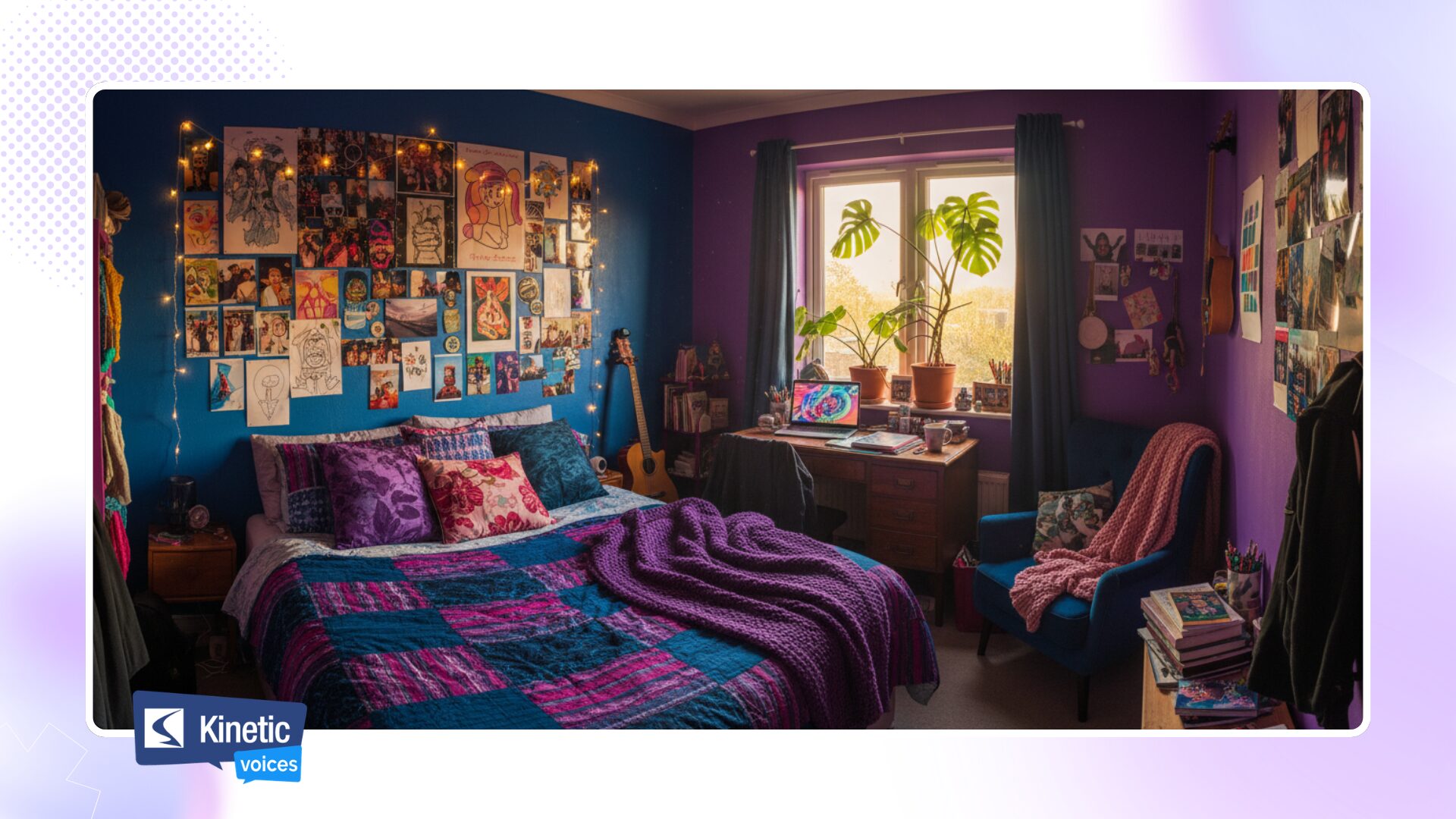
The research asked eleven to fifteen-year-olds to describe their ideal bedroom, and the answers were more instructive than you might expect for a sector thinking about student accommodation design.
The top priority was comfort. 41% said they wanted a big, comfortable bed. Not a smart mirror. Not Alexa integration. A bed they could sink into and feel safe in. One student’s quote in the research: “I want a bed that’s huge and soft where I can just lie down and chill.”
Storage came second. A desk or study area came third. Screens and gaming-related elements accounted for 37% of mentions, which is significant but not dominant. And then, notably, identity: colour, personalisation, the ability to make the space feel like theirs.
Only 3% of students specifically asked for an ensuite. Caroline’s read on this was not that they do not want one, but that they have never considered not having one. It is a hygiene factor, invisible until it is absent.
What is notable about this list is what is not on it. Minimalism is not on it. The blank canvas, which has driven a lot of accommodation design in recent years, is not what this cohort is asking for. They want colour. They want warmth. They want a space that reflects who they are and what they care about.
When asked to choose from nine bedroom styles, Tech Gamer’s Heaven came first overall, driven heavily by male respondents at 53%. But the Cosy Chill Retreat came a close second overall, driven heavily by female respondents, and was the second most popular choice for girls too. The through-line in both is not technology or aesthetics. It is purposefulness. They want spaces that serve them, that enable them to be comfortable, creative, expressive, and connected.
The personalisation principle
This finding landed particularly well for me because it connected directly to my own experience as a student. I lived in PBSA accommodation, and one of the things I valued most was a large pinboard next to the bed and another next to the study desk. Not for notes or revision. For pictures from my year abroad, moments from throughout the year, evidence that this space was mine and that I had lived something here.
That instinct has not gone away in the next generation. If anything, the research suggests it has intensified. Students who make their space their own are more invested in it. They look after it more. They want to spend time there. And when they feel ownership over their environment, they are more likely to feel belonging within it.
One attendee in the session described a low-cost intervention that illustrated this perfectly. Their estates team was asked to paint one wall in the hall’s colour. Students then painted a mural on top of it. The committee paid for it. It was cheap. And it transformed how students related to the space.
The practical implication for institutions thinking about Gen Alpha is this: rather than designing for a particular aesthetic, design for personalisation. Large pinboards. Paintable surfaces. Communal spaces that can be adapted and changed by the students who use them. The space does not need to be beautiful by any external standard. It needs to feel like theirs.
What Gen Alpha actually want from communal spaces
The research, and the room discussion, pointed to a clear set of principles for communal space design that works for this cohort.
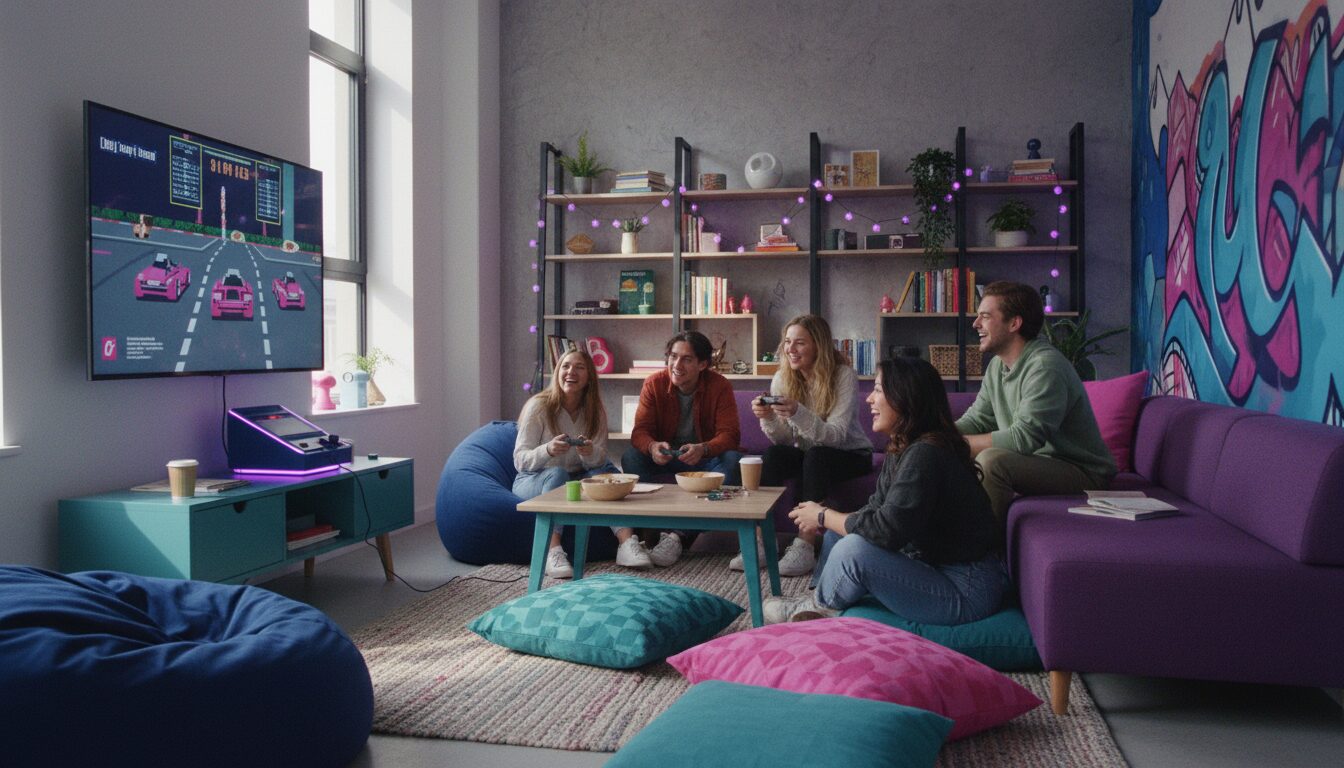
They want human connection. The data shows that hanging out with friends in person remains one of the top things Gen Alpha says it spends time doing. The communal space needs to make that easy, not just possible.
They want their interests reflected. The link between identity and interests that emerged from the bedroom research applies to communal spaces too. A room with a retro gaming console, a big screen, a space to chill that does not feel institutional, tells students something about whether the people who designed it understood them.
They want comfort over cool. For Millennials, accommodation design was often about looking good. For Gen Alpha, Caroline suggested, it is about being purposeful. They do not want tech for tech’s sake. They want to understand why something is there and what it does for them.
The room produced some brilliant low-cost ideas during the session. Retro gaming consoles, a PlayStation 2 can be found for around forty pounds and the games for two pounds each, can anchor a social space for a whole group with minimal investment. Fabric backdrops in different colours and textures can transform a communal area for different events and be stored and reused. A wall painted in the hall colour with space for students to add to it over the year builds a visual record of community.
When the conversation moved to bigger budget ideas, a cinema with elevated theatre seating and velvet curtains came up. Wood panelling and grand study tables that feel aspirational and serious. A fully adaptable multi-use space with high-end AV. The ambition in the room was not for gimmicks. It was for spaces that feel genuinely worth being in.
Technology as infrastructure, not feature for Gen Alpha
One of the clearest messages from Caroline’s research was that Gen Alpha’s relationship with technology is fundamentally different from the way previous generations related to it. For Millennials and Gen Z, technology was often something you adopted and engaged with. For Gen Alpha, it is simply the environment they have always lived in.
This means that digital experiences in accommodation need to be invisible when they work and catastrophic when they do not. Wi-Fi going down is not an inconvenience. It is a system failure. A clunky booking process or a communication tool that requires effort to use will not be tolerated in the way it might have been by an older cohort.
But it also means that technology for its own sake will not impress them. A smart mirror in the bathroom is not interesting if it does not serve a clear purpose. An app that requires learning is not an asset if it creates friction. The question to ask when designing any digital touchpoint for Gen Alpha is: does this reduce friction, or does it add it?
The student in the film Caroline showed, her fifteen-year-old stepson Joel, said something that I keep coming back to. He was not describing a technologically advanced environment. He was describing somewhere that felt like mine. Somewhere I can chill. But also not be completely alone.
The technology Gen Alpha needs from their accommodation is largely the same technology every student needs: reliable Wi-Fi, frictionless digital communications, systems that just work. What matters more, the research suggests, is the human environment those systems enable.
Two years to get ready
Caroline’s closing point was a challenge as much as a summary. None of us can overhaul our accommodation estate in two years. That is not the ask. The ask is to start thinking now, with the evidence available, about where the gaps are and what can change.
For some teams, that might be a communal space refresh that prioritises warmth and personalisation over minimalism. For others, it might be a conversation about how digital communications are designed and delivered. For others still, it might be thinking about what welcome looks and feels like for a cohort that arrived at secondary school during a pandemic and spent some of their most formative social years largely isolated.
What the research makes clear is that Gen Alpha are not harder to reach than previous generations. They are, if anything, more explicit about what they need. They want to be happy. They want connection. They want a space that feels like theirs. They want to be proud of where they chose to go.
The sector has two years to show them it was listening.
This is the second of two articles drawing on research presented by Caroline Cockell, Director of Marketing at Student Roost, at CUBO ResLife 2026. The first article, on who Generation Alpha actually are, is available here.
Kinetic was the Headline Sponsor of the CUBO Residence Life Conference 2026. This is part of an ongoing series of articles reflecting on sessions from the event.
Read more Kinetic Voices here.